Electric Kool Aid Acid Test . In the 1960s, kesey led a group of psychedelic. It looks like you're offline. Pin by Jonathan Cross on Skull Art Album art, Pulp art, Skull art from www.pinterest.com Tanned pages and age spots, however, this will not interfere with reading. Although the merry pranksters were dead, however, pranksterism had a. This is the seminal work on the.
What Is A Diprotic Acid. The most important chemical feature for a diprotic acid molecule is its ability to deprotonate two protons in two sequential steps during. What do you mean by diprotic acid?
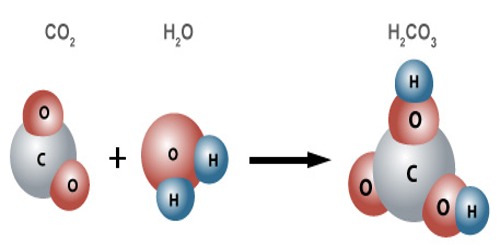
Carbonic Acid Assignment Point from www.assignmentpoint.com
This is in contrast to acids capable of donating more than one proton/hydrogen, which are called polyprotic acids. The most important chemical feature for a diprotic acid molecule is its ability to deprotonate two protons in two sequential steps during. Another name for a diprotic acid is a dibasic acid.
Is H2So3 A Diprotic Acid?
Hydrochloric acid (hcl), acetic acid (ch 3 co 2 h or hoac), nitric acid (hno 3), and benzoic acid (c 6 h 5 co 2 h) are all monoprotic acids. Sulfuric acid (h 2 so 4) is a diprotic acid. What do you mean by diprotic acid?
Pretend That #H_2X# Is A Diprotic Acid.
Sulphuric acid can lose one hydrogen atom to form. What is a diprotic acid example? Compare this to a monoprotic acid.
Diprotic Acid Definition And Examples.
Since, in a polyprotic acid the first hydrogen will dissociate faster than the others, if the ka values differ by a factor of 10 to the third power or more, it is possible to approximately calculate the ph by using only the ka of the first hydrogen ion. The most important chemical feature for a diprotic acid molecule is its ability to deprotonate two protons in two sequential steps during. The term is used to describe acids whose formula may be represented as h 2 b =.
In Chemistry, A Diprotic Acid Is An Acid That Can Donate Two Hydrogen Atoms ( H) , Or Protons, Per Each Molecule Of The Acid To A Solution That Is In An Aqueous State, Or In Water.
A monoprotic acid donates only one proton or hydrogen atom per molecule to an aqueous solution. A diprotic acid is a variant of polyprotic acid that can release two protons. Diprotic acids, such as sulfuric acid (h 2 so 4), carbonic acid (h 2 co 3), hydrogen sulfide (h 2 s), chromic acid (h 2 cro 4), and oxalic acid (h 2 c 2 o 4) have two acidic hydrogen atoms.
Polyprotic Acids May Be Further Categorized According To How Many Protons They Can Donate (Diprotic = 2, Triprotic = 3, Etc.).
A diprotic acid is an acid which can donate two protons or hydrogen atoms per molecule to an aqueous solution. Diprotic acid is a type of polyprotic acid; Look up on a table the ka1 for the acid.


Comments
Post a Comment